

Behind the Smiles
It's ok to not be ok, especially if we lean on each other

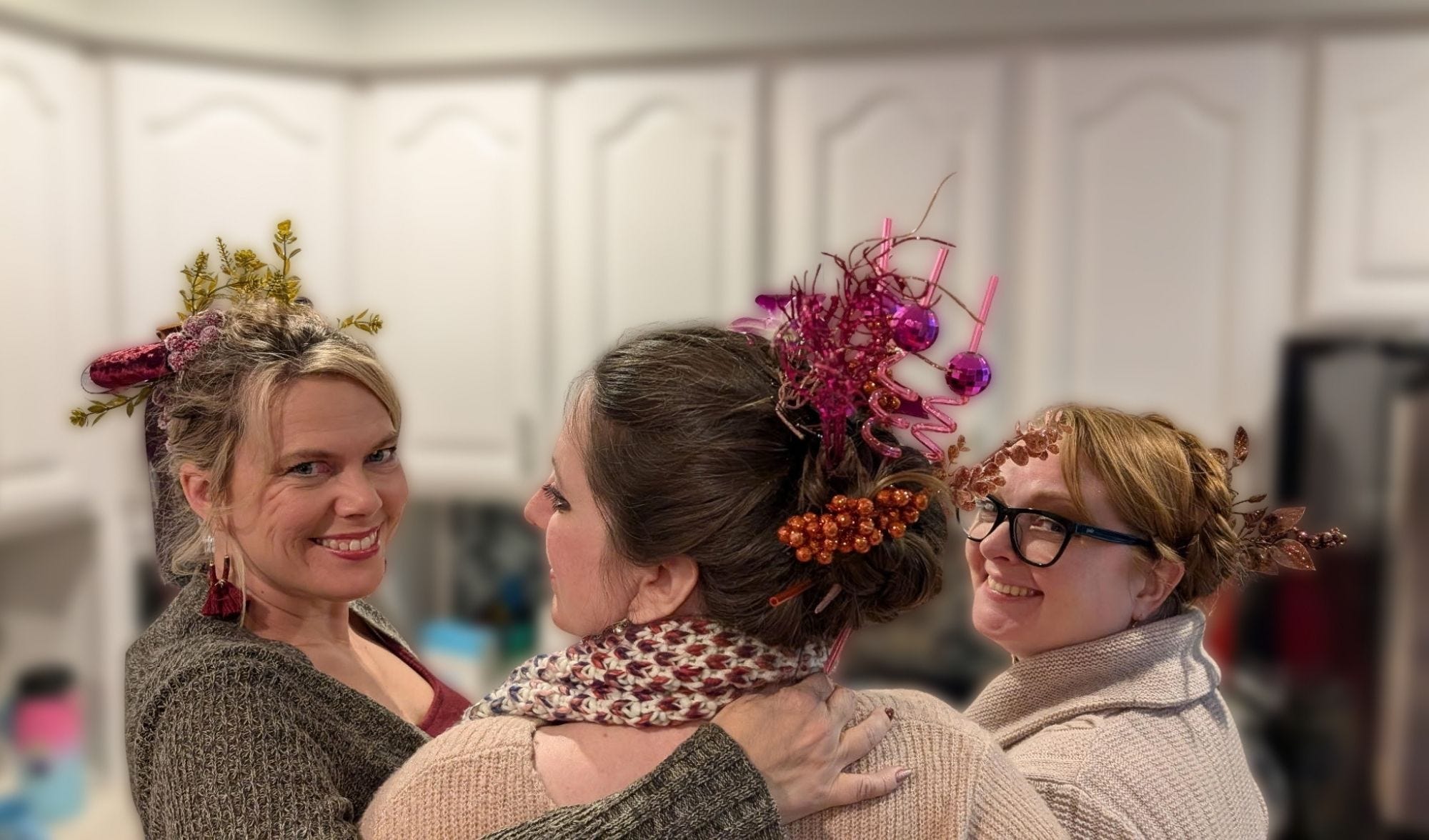
Holiday Spirits
This weekend I’m having a Friendsgiving with some dear friends I’ve known for years. When they arrived, I was finishing up this piece and wanted their feedback. What happened was a raw, heartfelt conversation about our experiences, and I’ve asked them if it’s ok to include their thoughts. You’ll see them listed as Mary and Arin below.
(Much thanks to Mary and Arin).
A few weeks ago, I was walking my dog when I encountered a woman getting out of her car. We exchanged pleasantries, and then she asked how I was. I answered with the customary “fine” and then returned the question.
To my surprise, she answered honestly,
“I’m lazy. I’m tired. And life feels too much.”
It stopped me short because I understand that sentiment. And I told her so, admiring her realness and courage to speak from that place.
There’s been so much written about the automatic How are you? I’m fine exchange. I’m not here to belabor linguistics and manners. Yes, we answer automatically for a number of reasons, but that’s not what I’ve been tossing around in my brain since this encounter. What I keep considering goes deeper.
I’m not sure we are fine. We haven’t been for a while, yet we’ve been ushered back into life as normal with no chance to fully process what we’ve been through the past 5 years.
The world shut down. Do you remember it? Lay aside all the political messaging and real versus not real theories. Strip it down to the bare bones.
The world shut down. The collective was physically separated. Fear permeated every corner.
In her book, On Our Best Behavior, Elise Loehnen writes:
One of the fascinating phenomena in the first few months of the coronavirus pandemic was to watch people everywhere seized with the sudden revelation that they could die. Toilet paper was horded, canned goods were stocked, PPE was seized, all as a bulwark against this potential. I suspect it was the first time many people had allowed this reality to pierce their consciousness; in response, it held them by the neck, in paroxysms of fear.
Do you remember that? Take a moment to feel down to your bones. Do you remember?
This wasn’t a 3 day holiday weekend and then back to work. This was a collective trauma, a near-total shut down, a complete overhaul of infrastructure, and a global loss. Take any one of those, and you can see how much of an impact it could have on the psyche. But we experienced it all.
Arin: The first thing that comes up for me is the images of the refrigerated trucks outside the hospitals as mobile morgues. That image is traumatic in and of itself, and add to that the idea of dying alone. You’re buried alone because no one is allowed to see you. It emphasized how alone we felt in the world at that time.
Mary: And how much that’s been normalized. We became numb to it or downplayed it. It’s like we crave “normal” so much that we collectively push it down.
Heigh Ho, Heigh Ho
And then, with no chance to collectively grieve, back to work we went. We leapt back to life “as normal,” but we weren’t normal. Adolescent brains changed from the stress; they physically changed. And guess what? Adults’ brains did, too, even in people who didn’t get sick.
When I talked about this in one of my academic forums, a colleague brought up a key point: there were positive changes, too, and many of those fell away. Greater work/life integration, embracing Nature, revisiting hobbies, time to reflect, and a sense of supportive community came into our lives full force and then slowly whittled away. One person said “We had a glimpse of what could be and lost it.” She described it as a “kid having been given a toy for the holidays only to have it taken away.” It was an interesting discussion because the upshot was that most people weren’t opposed to returning to in-person work and all the other rules in The Beforetimes; they were grieved for not having time and opportunity to process the change.
Mary: And our company was kind of slower than most to have a return to work date, and luckily we do have some flexibility. Still, the crazy thing is that before Covid, I was able to work from home one day a week anyway, so it was just returning to normal.
Arin: The “we are all in this together” quickly shifted to a weird animosity in the air for friends that I know. There was a “have and have not” mentality. So if one employer allows people to work from home, and another requires a stricter return to work, I watched people be resentful of each other rather than be annoyed with systems that enforced these policies to begin with.
No time to process
If you think back, there might be a part of you who believes we did hash all this out. But look closely at the conversations. There were certainly power struggles and arguments over pieces of cloth and vaccines. Right? That word—vaccine—what did it do to your body to read it? I definitely felt a cringe writing it because that word became a symbol for where you stood on the political spectrum, which then became a symbol for whether you were morally right or wrong, which ultimately became a cue as to whether you are with us or against us.
Ohhhh. There’s the rub. A symbol became synonymous with identity, and humans often use identifiers to judge.
We went from ordinary life to crisis. And in that crisis, for a moment, we united. We held our loved ones, connected on Zoom, sang to our neighbors in the street.
And then it disappeared into fighting about symbols.
Fast forward to present day. We are still fighting over symbols with leadership failing to facilitate helpful conversations. (Arguably, we’ve been fighting over symbols for centuries, but that’s for a different post). Instead, we are tossed around from absurdity to absurdity. Pummeled. Saturated. Drenched in endless news stories of hatred, cruelty, and heartlessness. Our nervous systems weren’t designed to stand at the floodgates of merciless news every single day with no reprieve.
I’m tired of mental health advice that ignores the fact that we’re living through unprecedented collective trauma while being told individual self-care is the solution. Sometimes anxiety is a rational response to irrational circumstances. —Michell C. Clark, author/speaker/artist
Yes, Michell C. Clark. Yes, yes, yes. Maybe we are anxious because something is desperately wrong, and we aren’t sure collectively what to do about it.
Arin: So this might be kind of weird to admit but here goes. My geeky thing is to watch people play D&D (Dungeons and Dragons) online. And there are a lot of back episodes that were filmed during lockdown that I’m currently catching up on. Honestly, it’s really hard to watch those episodes because everybody was sitting in their individual homes and even cars trying to play a game. But it wasn’t just playing a game. It was trying to connect, to be with each other. It’s not only a reminder of all the things we lost but also but what we never fully addressed.
Mary: Yeah it’s the elephant in the room. We don’t talk about it because it’s so divisive. There’s so much blame. And if you go back, way back to the beginning of it, we were all living in the unknown and just trying to save lives. But somehow that part of it got lost in blame and divisiveness.
So what can we do?
I wish I had a perfect answer for that question. I wake up every day wishing I had that answer. I can, however, share some wisdom that may help:
Pay attention to the feelings. If something feels off, explore it. If what you believed to be true about a person, idea, movement doesn’t quite add up anymore, get curious. If your body feels tense, ask what alarm might be going off for you. Get comfortable with discernment as it lands in your body.
I think about the woman I met while walking my dog. She didn’t bullshit around. This is how I feel, and I just don’t have the energy to admit otherwise. Now, I’m not saying you need to lay all your problems on everyone you meet, but be honest about how you feel when you feel comfortable to do so.
Remember that a healthy nervous system isn’t one that’s calm all the time. It’s one that is able to move in and out of different states as needed. Knowing this can keep you from dissociating or bypassing during tough times (and beating yourself up that you don’t have it together).
Individual self-care isn’t a cure all, but individual self-reflection is a beautiful tool. Want a place to start? Reflect on symbols. I am a geek about them, I know, but there’s a reason for that. What does XXX represent for me? How does it sit in my body when I think about it? Once you know how a symbol lands for you, get curious about what others think.
Along those same lines, look for symbols of hope, as well.
Open up and talk about all of this. The headlines lead us to believe that people are on completely opposite sides of the spectrum, when the reality is that people float in different places along the middle. I can’t tell you the relief I hear from clients when they open up and find that they aren’t alone right now. Find your people, and express some of the things you’ve been feeling.
Read books written during other tough times. This is a brilliant suggestion from my fabulous book coach Caroline Donahue.
Let yourself grieve. Certainly grieve the loss of people in your life, but give yourself permission to expand this concept. You can grieve the loss of simplicity, of certainty, of connection, of balance, of autonomy, of financial security. Let your heart cry out for what you miss. And then, let it lead you to centered and healthy ways to cope. If you need help with that, I’m here.
Mary: This was actually really therapeutic for me. We don’t pause to think about this anymore. Even with all the weird stuff going on in the Nation right now, we head to work as normal. We are distracted, and the little things seem like big things. We are in a bubble, and it’s too overwhelming to process the little and big at the same time. It’s almost like a self-defense mechanism that we screen all that stuff out. But it’s so freaking important. Taking the time to intentionally focus on feelings and thoughts that we try to repress helps us not feel so hopeless.
Arin: I’ve actually been thinking a lot about my anxiety that comes up reflecting on the lockdown, but this is the first time I’ve been able to verbalize it aloud since then. I’m immunosuppressed, and all of this makes me feel disposable. And trying to normalize all of that—I haven’t figured out how to do it besides not do it. Or to joke about it because that helps me cope. This conversation helped me realize how much I haven’t processed all of it. It’s easy to get into a mindset that no one cares, but when you have these conversations you realize that so many people really do care, and that is what makes all the difference.